
Is YOUR Team Engaged?
In yesterday’s article, we spoke about the ways in which we have to find ways to do better for our people. This is the organisation’s To-do, of course, but realistically it isn’t theirs only and even if it were, we simply can not afford to wait for them to deliver. So it’s everyone’s to-do and...

In yesterday’s article, we spoke about the ways in which we have to find ways to do better for our people. This is the organisation’s To-do, of course, but realistically it isn’t theirs only and even if it were, we simply can not afford to wait for them to deliver. So it’s everyone’s to-do and we all have to do something about it.
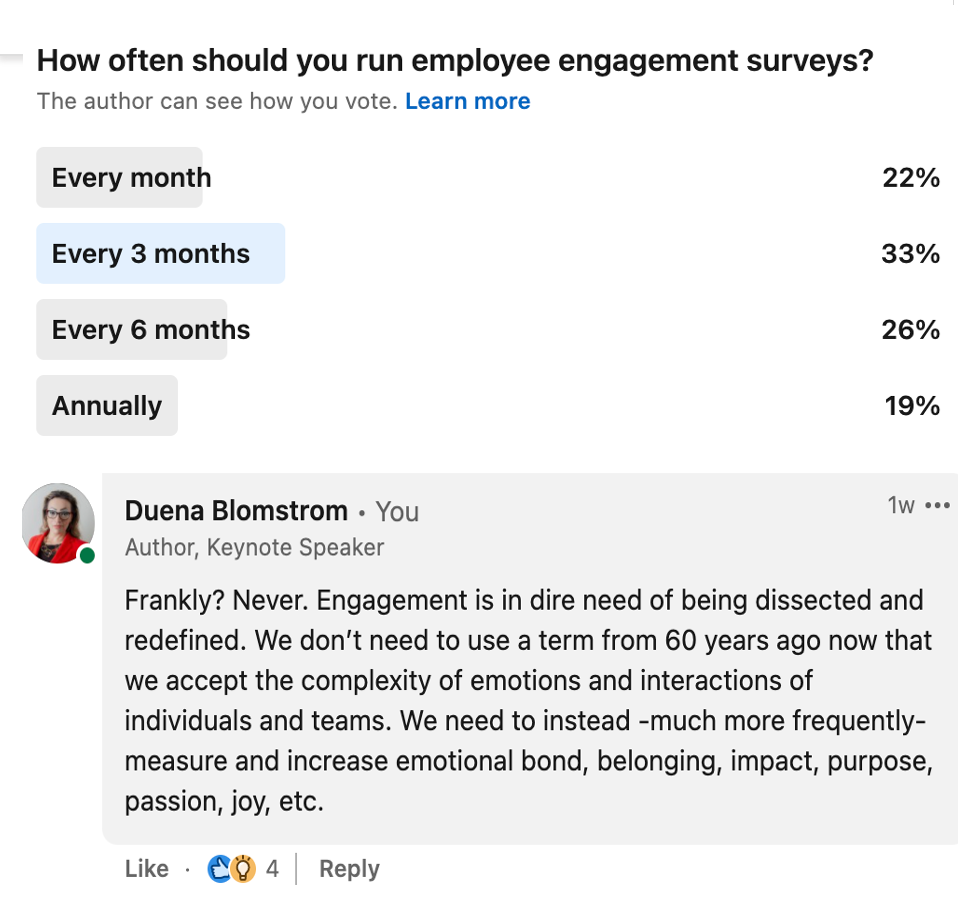
In this video, we suggest that if you want healthy, happy and high performing teams, then you should start at your own team level and start with the definition of “engagement”. There are of course many other aspects to let us know whether our people are suffering from the abuse we discussed yesterday, but this one should be easy and if we are to look at it we have to start by redefining it.
Any data you choose to believe shows the same thing - an overwhelming majority of employees are not engaged with their place of work. Furthermore, most are, a step further "actively disengaged". That has monetary as well as human costs. It's a clear one to tackle. Let's start this honest exploration together.
We spoke about this many times before and next week we will do a deeper dive exploration into the topic, the history of the term, the way it has been approached historically, the connection between engagement and its predecessor - “employee satisfaction” as well as its alleged evolution towards “employee experience” and so on.
In this video, we simply remind you that the definition was made before terms such as “purpose”, “impact” or “belonging” and “personal brand” became commonplace and that we ought to examine the definition and create one of our own.


